
Tel:
+86-15381916109
Email:
Email:
No.26 TianJian Lane, Yinzhou District, Ningbo, Zhejiang, China
Views: 0 Author: Site Editor Publish Time: 2026-03-15 Origin: Site


A weak bracket can quietly ruin a strong structure. Shelves sag, joints loosen, and heavy frames begin to shift. In many projects, the right Metal corner bracket makes the difference between stability and failure. In this guide, you will learn how to choose brackets based on load capacity, materials, bracket designs, and proper installation planning.
In many projects, a standard metal corner bracket works perfectly well—until the load increases beyond what thin metal or small fasteners can handle. Heavy-duty brackets become necessary when structures must support significant weight, resist vibration, or maintain alignment over time. Examples include stone countertops, workshop storage racks, industrial shelving units, and large furniture frames where joints carry constant pressure. Thin brackets often fail because they are designed for light reinforcement rather than structural support. When subjected to sustained loads, the metal may gradually bend, fasteners may loosen, and joints may begin to shift. Over time, this can cause shelves to sag, cabinet frames to twist, or mounted equipment to become unstable. In heavy installations, the bracket is not just a connector—it becomes a load-bearing component of the structure.
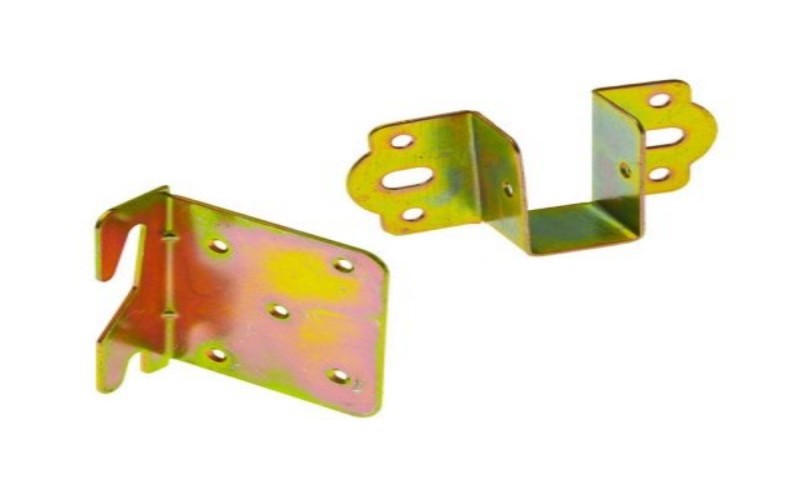
Common scenarios where heavy-duty brackets are essential include:
● Supporting stone, granite, or concrete countertops
● Reinforcing garage or warehouse shelving systems
● Securing machinery or equipment mounts
● Strengthening workbench frames or structural joints
● Stabilizing large cabinets or commercial furniture
In these situations, selecting a stronger bracket helps prevent gradual structural fatigue that might not appear immediately but can compromise long-term stability.
Load capacity is one of the most misunderstood aspects of bracket selection. The weight a bracket is expected to hold is known as the working load, while the manufacturer’s specification usually lists a rated load capacity. The rated capacity represents the maximum weight a bracket can support under ideal conditions. Professionals rarely design structures around the maximum rating alone. Instead, they apply a safety margin so that the bracket operates well below its limit. This approach reduces the risk of fatigue, deformation, or unexpected failure caused by uneven loads or dynamic forces.
For example:
● If a shelf is expected to hold 120 lbs, installers may choose brackets rated for 160–180 lbs or more.
● In industrial environments, engineers may apply safety factors between 2× and 3× the expected load to account for movement, vibration, or impact forces.
By selecting brackets with higher rated capacities than strictly required, the structure remains stable even as loads fluctuate or materials age.
Not all brackets labeled “heavy-duty” are equally strong. Several structural characteristics directly affect how well a metal corner bracket performs under stress. Metal thickness is one of the most important indicators. Brackets made from thicker steel resist bending far better than thin stamped metal. Wider bracket legs also improve load distribution because they spread stress across a larger mounting surface. Another important design feature is reinforcement. Many heavy-duty brackets include structural enhancements that dramatically increase rigidity:
● Gusset plates (triangular supports) that strengthen the 90-degree joint
● Ribbed edges or embossed reinforcement that prevent bending
● Multiple mounting holes to distribute forces across more fasteners
● Wider mounting flanges for better load transfer into the structure
These design improvements allow brackets to resist both vertical loads and lateral forces. When evaluating heavy-duty brackets, these structural elements often matter more than the overall size of the bracket itself.
For most heavy-duty installations, steel remains the preferred material because it combines high tensile strength with excellent rigidity. When a bracket must support substantial weight—such as shelving filled with tools or industrial storage racks—steel’s ability to resist deformation makes it highly reliable. Steel brackets are also easy to manufacture in thicker gauges, which further increases their load-bearing capability. This is why steel corner brackets are commonly found in construction framing, workshop equipment, and warehouse storage systems. Even relatively compact steel brackets can support significant loads when paired with appropriate fasteners and structural mounting points.
While standard steel offers excellent strength, environmental exposure can affect its long-term performance. Two widely used protective options are stainless steel and galvanized steel, each suited to different conditions. Stainless steel contains chromium, which forms a protective layer that resists rust and corrosion. This makes it a practical choice for installations exposed to moisture, such as kitchen shelving, outdoor structures, or coastal environments where salt air accelerates corrosion. Galvanized steel, on the other hand, is coated with a zinc layer that protects the underlying metal from rust. Although it may not match stainless steel’s corrosion resistance in extreme environments, it provides excellent durability at a lower cost and is widely used in construction projects, fencing systems, and outdoor frameworks.
In some projects, the goal is not maximum strength but a balance between durability and reduced weight. Aluminum corner brackets serve this purpose well because they offer corrosion resistance while remaining significantly lighter than steel.
Aluminum brackets are commonly used in:
● Portable equipment frames
● Vehicle-mounted storage systems
● Trailers or mobile workstations
● Lightweight outdoor structures
However, aluminum has lower rigidity than steel. To achieve similar strength, aluminum brackets often need thicker profiles or reinforced designs. As a result, they are best suited for moderate loads where corrosion resistance and portability are more important than maximum structural capacity.
Choosing the right bracket material requires considering both mechanical demands and environmental conditions. Exposure to moisture, temperature changes, and chemicals can significantly affect the lifespan of a bracket.
The following table compares common bracket materials and their typical applications:
Material | Strength Level | Corrosion Resistance | Typical Applications |
Carbon Steel | Very high | Moderate (requires coating) | Structural frames, heavy shelving, workshop equipment |
Galvanized Steel | High | High | Outdoor construction, fencing, deck framing |
Stainless Steel | High | Very high | Kitchens, coastal installations, humid environments |
Aluminum | Moderate | High | Portable equipment, lightweight structures |
Selecting a material that matches the installation environment is just as important as choosing the correct bracket size. A bracket with sufficient strength but poor corrosion resistance may deteriorate quickly outdoors, while a highly corrosion-resistant bracket may be unnecessary for dry indoor environments.
Among the many hardware options available, the L-shaped metal corner bracket remains the most widely used solution for reinforcing right-angle joints. Its simple geometry allows it to connect two perpendicular surfaces while distributing load across both sides of the joint. Because of this balance of strength and simplicity, L-brackets appear in everything from cabinet frames and shelving systems to furniture assemblies and light structural framing.
The effectiveness of the 90-degree design comes from how it stabilizes joints. When installed correctly, the bracket transfers weight from horizontal components into vertical supports, preventing movement or sagging over time. Multiple mounting holes also allow installers to spread stress across several fasteners rather than concentrating pressure at a single point. This is especially important for wooden structures, where uneven load distribution can cause splitting or joint failure.
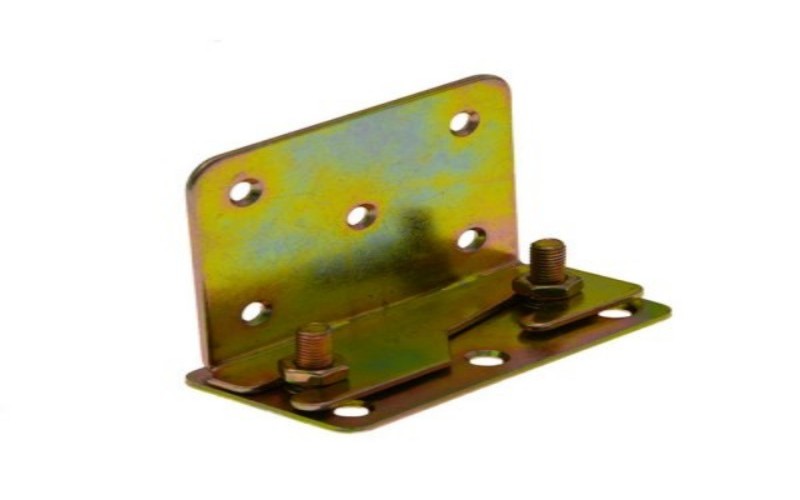
Typical projects where L-shaped brackets perform well include:
● Wall-mounted shelving and storage systems
● Cabinet and furniture frame reinforcement
● Interior framing or lightweight structural repairs
● Countertop support for moderate loads
In many cases, the strength of an L-bracket depends more on material thickness and mounting hardware than on the shape itself. Thicker steel brackets with wider flanges generally provide significantly greater rigidity than thin stamped brackets designed for decorative use.
For installations where standard brackets cannot safely support the load, reinforced designs offer a substantial increase in structural stability. These brackets often include triangular gussets or ribbed supports at the inside corner, which prevent bending and distribute forces more efficiently. Gusseted brackets are particularly useful in environments where joints experience heavy weight or repeated stress. Workbenches, deck framing systems, and equipment mounts all benefit from this additional reinforcement because the bracket must resist both vertical loads and lateral forces.
Compared with simple L-brackets, reinforced brackets typically provide:
● Greater resistance to deformation under heavy loads
● Improved load transfer between connected surfaces
● Increased rigidity in vibration-prone environments
These characteristics make them a preferred option in industrial settings, where structural reliability is more important than minimal material usage.
Not all structural joints are perfectly square. In renovation projects, custom furniture builds, or irregular framing systems, installers often encounter angles that deviate slightly from a standard 90-degree connection. Adjustable metal corner brackets solve this problem by allowing small positional changes before final tightening. These brackets usually incorporate slotted mounting holes or pivoting joints, enabling precise alignment during installation. The ability to shift the bracket position slightly helps compensate for measurement inaccuracies or uneven surfaces. As a result, adjustable brackets are particularly useful in situations where exact alignment is difficult to achieve during initial assembly.
The following table highlights the differences between common bracket designs and their typical applications.
Bracket Type | Key Structural Feature | Strength Level | Common Applications |
L-Shaped Bracket | Fixed 90° angle with multiple screw holes | Moderate to high | Shelves, cabinets, furniture frames |
Reinforced / Gusseted Bracket | Triangular support or ribbed reinforcement | Very high | Workbenches, heavy shelving, deck framing |
Adjustable Bracket | Slotted holes or movable joints | Moderate | Custom furniture, angled framing, alignment adjustments |
Choosing the appropriate design depends largely on the load conditions and the geometry of the joint. While simple L-brackets work well for many applications, reinforced or adjustable designs provide better performance when loads increase or alignment becomes more complex.
The strength of a metal corner bracket is only fully realized when it is positioned correctly within the structure. Even high-quality brackets can fail if weight is unevenly distributed or if too few supports are installed. Proper spacing helps transfer loads into the surrounding structure rather than concentrating stress on a single connection point.
For shelving and similar horizontal structures, brackets should be placed so that the load is distributed evenly across the surface. Longer shelves or heavier materials often require additional brackets to prevent sagging in the middle. For example, a large storage shelf carrying tools or equipment typically needs more support points than a decorative wall shelf holding lightweight objects.
Careful layout planning also ensures that brackets align with structural elements such as wall studs or framing members. When loads are transferred directly into these supports, the entire structure becomes significantly stronger and more stable.
A strong bracket alone cannot guarantee structural integrity if the fasteners are undersized. Screws, bolts, or lag fasteners must be capable of handling the same level of load as the bracket itself. In heavy-duty installations, using weak fasteners can cause joints to loosen even if the bracket remains structurally intact. In practice, installers choose fasteners based on the material being joined. Wood framing typically uses coarse-thread structural screws or lag bolts, while metal structures may require machine bolts or self-tapping screws. Equally important is ensuring the fasteners anchor into solid structural components rather than thin surface materials.
Key considerations when selecting fasteners include:
● Diameter and length suitable for the bracket holes
● Compatibility with the base material (wood, metal, or concrete)
● Corrosion resistance for outdoor installations
● Sufficient quantity to distribute load across all mounting points
Mounting brackets directly into wall studs, beams, or structural frames dramatically increases load capacity and reduces the likelihood of joint movement.
Many bracket failures occur not because of poor materials but because of small installation mistakes. Misalignment during mounting can create uneven stress that gradually bends the bracket or loosens the fasteners. Similarly, using screws that are too short or too thin may prevent the bracket from fully transferring the load into the surrounding structure. Another frequent problem is installing brackets on surfaces that cannot support the intended load. Drywall, thin paneling, or weak substrates may appear stable initially but eventually fail when weight is applied over time.
Typical installation issues include:
● Brackets not sitting flush against both surfaces
● Fasteners placed too close to material edges
● Inadequate number of brackets for the load
● Mounting into non-structural materials
Correcting these problems during installation is far easier than repairing structural damage later.
Although metal corner brackets generally require minimal maintenance, periodic inspection helps ensure that the structure remains safe and stable. Fasteners can loosen over time due to vibration, temperature changes, or repeated loading, particularly in workshops or industrial environments. Routine maintenance usually involves checking that all fasteners remain tight and examining the bracket surface for signs of corrosion or fatigue. Outdoor installations may benefit from occasional cleaning or protective coatings to reduce rust formation. Regular inspection is especially important in applications where brackets support heavy loads or are exposed to environmental stress. Preventive maintenance ensures that small issues are addressed early, preventing them from developing into larger structural problems.
Choosing the right metal corner bracket requires more than simply selecting a size. Load requirements, material durability, bracket design, and installation all influence long-term performance. The right choice ensures stronger joints, safer structures, and reliable heavy-duty support. Ningbo Yinzhou Gonuo Hardware Co., LTD. provides durable brackets designed for demanding applications, helping customers build stable structures with dependable hardware solutions.
A: Select a metal corner bracket with rated capacity above the expected load, thicker steel, and reinforced gussets for structural stability.
A: A metal corner bracket made from stainless or galvanized steel offers strong corrosion resistance and reliable long-term outdoor performance.
A: Use enough metal corner bracket supports to distribute weight evenly; long shelves typically require three or more brackets.
A: Reinforced metal corner bracket designs use gussets or ribs to reduce bending and improve load distribution in high-stress joints.