
Tel:
+86-15381916109
Email:
Email:
No.26 TianJian Lane, Yinzhou District, Ningbo, Zhejiang, China
Views: 0 Author: Site Editor Publish Time: 2025-07-02 Origin: Site


In any industrial piping or equipment system, flange connections must be secure and leak-free to ensure safe and efficient operation. Bolts are the foundation of these connections, and choosing the right type of fastener is critical to maintaining structural integrity and minimizing maintenance costs.
Double end bolts and full threaded studs are two common options for flange assemblies. While they may appear similar, their design, installation methods, and performance characteristics differ in important ways.
This article explains the key differences between double end bolts and full threaded studs, highlights their advantages and limitations, and offers guidance to help you select the most suitable fastener for your flange connections.
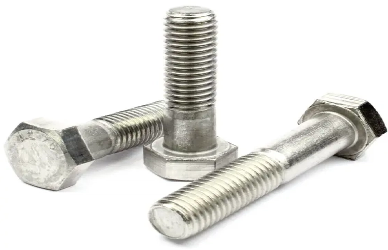
1.Definition and Key Design Features
Double end bolts are specialized fasteners with threads on both ends and an unthreaded shank in the middle. One end is designed to be screwed into a tapped hole or base material, while the other end is left exposed to accommodate a nut. This dual-thread design provides a secure and adjustable fastening solution that ensures precise alignment of connected parts.
2.Typical Applications in Flange Assemblies
These bolts are widely used in flange connections found in piping systems, pressure vessels, pumps, and machinery. They are especially valuable where components need to be frequently assembled and disassembled for inspection or maintenance, since the fixed end stays in place while the nut can be removed easily.
3.Advantages
Easy alignment during installation
Simplified maintenance because the bolt remains fixed in the base component
Strong and reliable clamping force
1.Definition and Key Design Features
Double end bolts are specialized fasteners characterized by having threads on both ends with an unthreaded shank section in the middle. One threaded end is designed to be securely screwed into a tapped hole or a base component, while the opposite end extends outward to accept a nut. This unique design allows for a stable, adjustable fastening connection that facilitates easy assembly and disassembly. The unthreaded shank provides additional shear strength, making the bolt suitable for high-stress applications.
2.Typical Applications in Flange Assemblies
Double end bolts are commonly used in various flange connections found in industries such as oil and gas, petrochemical, power generation, and heavy machinery manufacturing. They are especially valuable in situations where equipment needs frequent maintenance or inspection, as the bolt remains fixed in the base, allowing the flange or cover to be removed and reinstalled without fully removing the bolt. Typical applications include pipe flanges, valve assemblies, pressure vessels, and pump casings.
3.Advantages
Simplifies alignment during installation by keeping one end fixed
Facilitates quicker maintenance and reduces downtime due to easy disassembly
Provides strong clamping force with reduced risk of bolt movement or loosening
The unthreaded shank section offers improved shear resistance compared to fully threaded bolts
1.Design and Geometry
Double end bolts have threads only at both ends with an unthreaded shank, offering higher shear strength. Full threaded studs are threaded along their entire length, maximizing thread engagement for clamping.
2.Installation and Assembly
Double end bolts screw into a tapped hole on one side, staying fixed during assembly and easing alignment. Full threaded studs pass through both flange parts and require nuts on both ends, needing more time and access for installation.
3.Load Distribution and Clamping
The unthreaded shank of double end bolts resists shear forces better, while full threaded studs provide uniform clamping but may be weaker at the threads under shear.
4.Maintenance and Disassembly
Double end bolts allow easy nut removal without extracting the bolt, making them ideal for frequent maintenance. Full threaded studs need full nut removal and bolt extraction, increasing maintenance effort.
Load Requirements: Assess the magnitude and type of loads the fastener will bear, including static, dynamic, and impact forces. High-load applications may require bolts with higher tensile strength or an unthreaded shank for better shear resistance.
Environmental Conditions: Consider exposure to moisture, chemicals, temperature extremes, and corrosive environments. Fasteners must withstand these conditions without degrading, which affects material choice and protective treatments.
Maintenance Frequency: If the flange connection requires frequent assembly and disassembly, fasteners that facilitate easy removal and reinstallation—such as double end bolts—may be preferred. For permanent or rarely accessed joints, other types might be more suitable.
Industry Standards: Ensure compliance with relevant standards such as ISO, ASTM, ASME, or DIN to guarantee quality, compatibility, and safety.
Material Choice: Common materials include carbon steel for general use, alloy steel for high strength, and stainless steel for corrosion resistance. Each offers different mechanical properties and suitability based on the application environment.
Protective Coatings: Applying coatings like zinc plating, galvanizing, or specialized corrosion-resistant layers enhances durability and prevents rust. In harsh environments, these coatings are critical to extending fastener life and reducing maintenance costs.
While initial cost is an important factor, evaluate the total cost of ownership including maintenance, downtime, and replacement frequency. Investing in higher-quality bolts may have a higher upfront cost but will save money over time by reducing failures and service interruptions.
Lifecycle performance analysis helps identify fasteners that offer the best balance between cost, durability, and functionality, ensuring reliable flange connections with minimal long-term expense.
1.High-Pressure Piping Systems
Double end bolts are ideal for high-pressure piping flanges due to their strong clamping force and unthreaded shank, which enhances shear strength. Their fixed installation reduces bolt loosening, ensuring reliable operation under heavy loads and vibrations.
2.Equipment Requiring Frequent Maintenance
In equipment like pumps and valves, double end bolts remain fixed in the base, allowing quick removal and reinstallation of parts. This reduces downtime and labor costs, making them suitable for frequent maintenance.
3.Case Study: Switching from Full Threaded Studs to Double End Bolts
A facility faced frequent flange failures and downtime with full threaded studs. After switching to double end bolts, assembly alignment improved, installation time shortened, and bolt fatigue decreased, leading to better efficiency and lower maintenance costs.
Use calibrated torque wrenches or hydraulic torque tools to ensure precise tightening of double end bolts.
Follow manufacturer or industry standards (such as ASME or ISO) for torque specifications based on bolt size, material, and application.
Avoid over-tightening, which can cause thread stripping or bolt deformation, and under-tightening, which risks loosening and leakage.
Apply torque in a cross or star pattern when tightening flange bolts to distribute the load evenly and prevent flange distortion.
Use thread lubricants or anti-seize compounds recommended for the operating environment to reduce friction and achieve consistent preload.
Inspect gasket condition and alignment before assembly to ensure effective sealing.
Select bolts with appropriate corrosion-resistant materials or coatings, such as stainless steel or galvanization, especially in harsh environments.
Implement regular inspection schedules to identify early signs of corrosion or fatigue cracks.
Consider using thread-locking compounds or mechanical locking devices to reduce vibration-induced loosening and fatigue stress.
Store bolts properly in dry, controlled conditions before installation to avoid premature corrosion.
In summary, understanding the key differences between double end bolts and full threaded studs is essential for selecting the right fastener for flange connections. Double end bolts offer advantages in installation ease, shear strength, and maintenance efficiency, making them ideal for many industrial applications.
Partnering with reliable fastener suppliers ensures access to high-quality products that meet industry standards and performance requirements. For expert advice and quality double end bolts, Ningbo Yinzhou Gonuo Hardware Co., LTD. is a trusted choice. Their comprehensive solutions can help optimize your flange connections and improve operational reliability.