
Tel:
+86-15381916109
Email:
Email:
No.26 TianJian Lane, Yinzhou District, Ningbo, Zhejiang, China
Views: 0 Author: Site Editor Publish Time: 2026-03-14 Origin: Site


Ever noticed furniture starting to wobble after years of use? Loose joints and uneven loads often weaken frames over time. A Metal corner bracket offers a simple way to reinforce these vulnerable connections. In this article, you will learn how colorized galvanized brackets improve strength, resist corrosion, and help maintain stable furniture structures.
Furniture instability rarely begins with large structural failures. Instead, it typically starts at small but critical connection points where panels, legs, or frame components meet. These joints carry the majority of mechanical stress in furniture such as tables, cabinets, and shelving units. Over time, repeated use, shifting loads, and environmental changes can gradually loosen these connections. Wood-based joints are particularly vulnerable because wood expands and contracts with humidity and temperature fluctuations. Screws may slowly loosen, adhesives may weaken, and minor misalignments can accumulate. As a result, furniture that was once stable may begin to wobble or lose its original alignment. Connection points also experience concentrated forces when furniture supports heavy objects. Bookshelves loaded with books or cabinets storing kitchenware place continuous downward pressure on joints. Without reinforcement, these localized stresses can lead to cracks, loosened fasteners, or gradual deformation of the frame.
A metal corner bracket provides a simple yet highly effective structural solution by reinforcing right-angle joints. Installed across two perpendicular surfaces, the bracket acts as a rigid connector that stabilizes the joint and prevents movement between the two components. The bracket distributes forces more evenly across both surfaces, reducing stress on individual screws or wood fibers. Because the metal structure resists bending and twisting, it maintains the correct angle between connected parts even under load. This reinforcement is particularly valuable in furniture frames where maintaining precise alignment ensures overall stability.
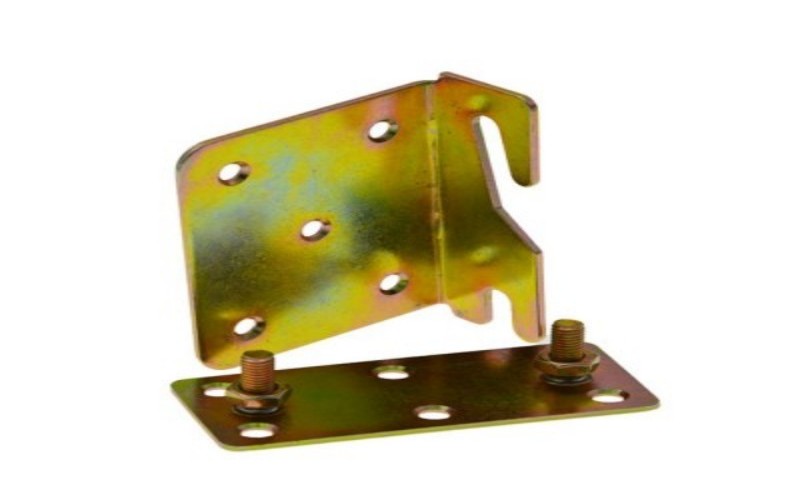
Furniture used daily is more likely to develop loosened joints due to constant motion. Desks, dining tables, office workstations, and storage cabinets are repeatedly subjected to shifting weight and lateral movement. Even slight instability can gradually worsen as movement increases friction and stress on fasteners. Corner brackets reinforce these high-traffic structural points and help maintain the original geometry of the furniture frame. Once installed, they significantly reduce lateral movement, which is one of the primary causes of wobbling.
Common furniture types that benefit from bracket reinforcement include:
● Bookshelves and modular shelving systems
● Dining tables and workbenches
● Kitchen cabinets and storage units
● Office desks and workstation frames
Adding reinforcement at these stress points improves long-term reliability and minimizes the need for frequent repairs.
One of the most important structural benefits of corner brackets is improved load distribution. When heavy objects are placed on furniture surfaces, the pressure often concentrates at specific connection points. Without reinforcement, this stress can cause wood panels to crack or screws to pull out over time. Corner brackets expand the contact area between connected components, spreading the load across a wider surface. This reduces the likelihood of localized material failure and helps maintain structural integrity under heavier loads.
Load Scenario | Risk Without Reinforcement | Benefit of Metal Corner Bracket |
Heavy bookshelves | Joint loosening and shelf sagging | Distributes weight across frame corners |
Large cabinets | Panel cracking near screw points | Reinforces connections and stabilizes structure |
Workbenches or desks | Frame twisting under uneven loads | Maintains rigid 90-degree alignment |
Storage racks | Fastener fatigue over time | Strengthens high-stress joints |
By stabilizing joints and distributing stress more effectively, metal corner brackets help furniture maintain both its strength and structural alignment over extended use.
Galvanization is one of the most important protective treatments used in metal hardware manufacturing. In this process, a layer of zinc is applied to steel components, forming a barrier that protects the base metal from moisture and oxidation. This zinc layer functions as both a physical shield and a sacrificial coating. Even if the surface experiences minor scratches, the zinc continues to protect the steel beneath from corrosion. As a result, galvanized brackets perform reliably in environments where ordinary steel hardware would deteriorate quickly. Furniture used in kitchens, bathrooms, garages, and utility spaces is often exposed to humidity, temperature fluctuations, and occasional water contact. In these environments, galvanized metal brackets maintain their structural integrity and appearance far longer than untreated alternatives.
Beyond corrosion protection, galvanized steel also offers significant mechanical strength. Steel brackets are engineered to resist deformation under both static and dynamic loads, making them suitable for furniture that must support weight consistently over time. Unlike lightweight connectors made from plastic or thin sheet metal, galvanized steel brackets maintain their shape under pressure. This strength allows them to handle both vertical loads and lateral forces without bending.
Important performance advantages include:
● High resistance to bending and flexing
● Improved load-bearing capacity for heavy furniture
● Long-term dimensional stability under repeated stress
● Reliable reinforcement in structural furniture frames
These characteristics make galvanized brackets especially valuable in commercial furniture, storage systems, and heavy-duty shelving applications.
While structural performance is essential, appearance also plays an important role in furniture hardware. Traditional metal brackets often have a bright metallic finish that may appear overly industrial when used in residential furniture. Colorized finishing processes—such as powder coating or electrophoretic coating—allow manufacturers to apply protective colored layers over galvanized steel. These finishes improve both visual compatibility and surface durability.
Colorized brackets offer several practical advantages:
● They allow brackets to match or complement furniture materials and colors
● The additional coating improves scratch and abrasion resistance
● Matte or textured finishes reduce visible reflections and fingerprints
● Designers can incorporate brackets as intentional decorative elements
Finish Type | Visual Style | Additional Benefits |
Matte black coating | Industrial or minimalist furniture | Reduces glare and hides fingerprints |
Bronze or antique finish | Rustic or vintage furniture styles | Adds decorative character |
Gold or brass tone | Premium interior design | Enhances visual contrast with wood |
Powder-coated color options | Modern modular furniture | Improves surface durability |
Colorized galvanized brackets therefore combine two important qualities: structural reliability and aesthetic flexibility. This combination allows furniture manufacturers and DIY builders to reinforce furniture frames without compromising the visual design of the piece.
When selecting a metal corner bracket for furniture reinforcement, thickness and material quality often have a greater impact on performance than overall bracket size. A larger bracket made from thin metal can still bend under pressure, while a smaller bracket manufactured from thicker steel may provide significantly stronger structural support.
In most furniture applications, brackets made from steel with a thickness of around 2–3 mm or more offer reliable rigidity. Thicker metal increases resistance to bending and helps the bracket maintain a stable 90-degree angle when subjected to weight or lateral movement. This characteristic becomes especially important for furniture such as bookshelves, storage cabinets, and workbenches, where the frame must remain rigid under continuous load.
Material composition also affects durability and environmental resistance. Galvanized carbon steel is commonly used because it balances strength with corrosion protection. Stainless steel brackets are often chosen for humid environments or outdoor furniture due to their higher resistance to rust. The appropriate material choice ensures that structural performance remains consistent over time.
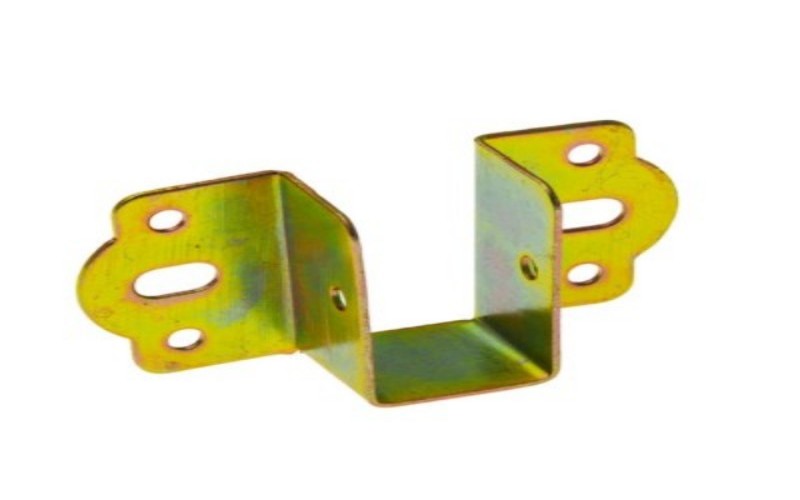
Beyond material thickness, several design features influence how well a bracket performs once installed. Small structural details can significantly affect installation accuracy, long-term stability, and overall durability. Countersunk screw holes are one of the most practical design improvements. These recessed holes allow screws to sit flush with the surface of the bracket, reducing protrusions that could interfere with nearby components or cause safety concerns. Flush mounting also improves the visual appearance of the furniture, especially when brackets are visible. Another important design factor is precision in the 90-degree bend. If the bracket angle is not perfectly square, the joint may experience uneven pressure during installation. Over time, this misalignment can weaken the connection and increase the likelihood of structural movement.
High-quality brackets often include additional refinements that improve both performance and installation efficiency:
● Smooth, deburred edges that prevent injury during handling
● Reinforced corners or ribbed sections that increase rigidity
● Consistent hole spacing for accurate fastener alignment
● Surface finishing that protects against scratches or corrosion
These design characteristics contribute to a bracket that is easier to install and more reliable during long-term use.
Different furniture structures require different levels of reinforcement. Using brackets that are either too weak or unnecessarily oversized can reduce efficiency or compromise structural stability. The following comparison highlights common scenarios where light-duty and heavy-duty brackets are typically used.
Bracket Type | Typical Thickness | Suitable Furniture | Structural Purpose |
Light-duty brackets | 1.5–2 mm | Small cabinets, drawers, decorative shelving | Basic joint reinforcement |
Medium-duty brackets | 2–3 mm | Standard bookshelves, tables, storage cabinets | Improved frame stability |
Heavy-duty brackets | 3 mm or thicker | Workbenches, industrial shelving, large cabinets | High load-bearing reinforcement |
Selecting the correct bracket strength ensures that furniture joints remain stable without adding unnecessary hardware or complexity to the structure.
Proper installation is just as important as selecting the right bracket. One of the most effective techniques for improving installation quality is pre-drilling pilot holes before inserting screws. Pilot holes guide screws into the material more accurately and prevent wood fibers from splitting during fastening. This step is particularly important when working with hardwood, plywood, or engineered panels such as MDF. Without pilot holes, screws may force the wood apart, weakening the joint instead of reinforcing it. Pre-drilling also helps ensure that screws enter the bracket holes at the correct angle. Accurate alignment improves fastening strength and reduces the risk of misaligned brackets that could compromise structural stability.
Placement plays a critical role in how effectively a metal corner bracket strengthens a furniture frame. Installing brackets randomly or only on one side of a joint may provide limited reinforcement and create uneven stress distribution. For best results, brackets should be positioned at high-stress connection points where structural loads are concentrated. In most furniture frames, these locations include the intersections between legs and horizontal supports, shelf corners, and cabinet frame joints. Balanced reinforcement is achieved by placing brackets symmetrically across the structure. For example, installing brackets on both sides of a frame corner distributes forces more evenly and minimizes twisting or shifting under load.
Common placement strategies include:
● Reinforcing opposite corners of shelving frames
● Adding brackets where vertical supports meet horizontal beams
● Installing interior brackets in cabinet frames to maintain alignment
● Supporting long shelves at both ends and midpoints when necessary
Careful placement ensures that the bracket strengthens the entire structure rather than only a single connection point.
The performance of a metal corner bracket is closely linked to the hardware used for installation. Even a high-quality bracket can fail if paired with inappropriate or undersized fasteners. Fasteners must match both the bracket hole size and the material of the furniture structure. Wood screws are commonly used for wooden frames, while machine screws with nuts may be required for metal-to-metal connections. In some heavy-duty applications, bolts or lag screws provide additional holding strength. Important considerations when selecting fasteners include screw length, diameter, and thread design. Screws must penetrate deeply enough into the material to provide secure anchoring without passing completely through the panel. Using compatible, high-quality mounting hardware ensures that the bracket functions as intended and maintains strong structural reinforcement throughout the lifespan of the furniture.
High-quality Metal corner bracket components strengthen furniture joints and improve load stability. Colorized galvanized finishes also protect brackets from corrosion and wear. Ningbo Yinzhou Gonuo Hardware Co., LTD. provides durable brackets designed for reliable reinforcement, consistent quality, and versatile use in furniture manufacturing and structural support applications.
A: A metal corner bracket reinforces right-angle joints, improving frame stability and preventing joint movement under load.
A: Select a metal corner bracket with sufficient steel thickness (typically 2–3 mm) to match the load and furniture frame size.
A: Yes. A galvanized metal corner bracket resists corrosion through its zinc coating, making it suitable for kitchens, bathrooms, or storage areas.
A: Use a heavy-duty metal corner bracket for bookshelves, workbenches, or storage racks where higher load capacity and rigidity are required.