
Tel:
+86-15381916109
Email:
Email:
No.26 TianJian Lane, Yinzhou District, Ningbo, Zhejiang, China
Views: 0 Author: Site Editor Publish Time: 2026-03-17 Origin: Site


What happens when standard parts cannot meet modern engineering demands? Many products require tighter tolerances, lighter structures, and faster production. Stamping Parts offer a practical solution by enabling precise designs and efficient large-scale manufacturing. In this article, you will learn how custom stamping parts improve efficiency, support complex engineering needs, and serve industries from automotive to electronics.
Modern manufacturing increasingly demands components that can be produced quickly, consistently, and at competitive costs. Stamping parts have become a preferred solution because the process transforms sheet metal into finished components with exceptional speed and repeatability. Instead of relying on multiple machining or fabrication steps, stamping combines precision tooling and automated presses to deliver large volumes of identical parts while maintaining strict quality standards. This combination of efficiency and reliability makes stamping particularly attractive for industries where component consistency directly affects product performance.
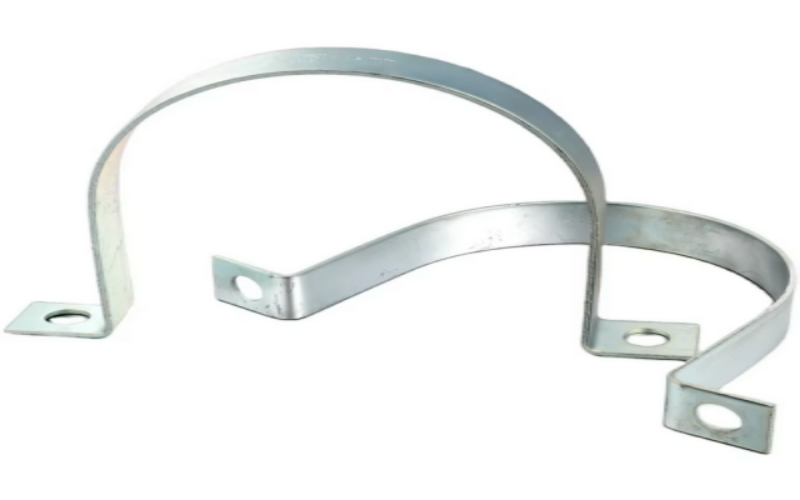
In high-volume engineering environments, dimensional accuracy is critical. Stamping processes use hardened dies and controlled press forces to shape metal sheets into exact geometries. Once the tooling is optimized, each cycle produces parts that closely match the original design specifications. Because the process is highly automated, variation between parts is extremely low. This level of repeatability helps ensure that components fit perfectly during assembly, reducing the need for adjustments or rework. As production volume increases, maintaining this consistency becomes even more valuable, particularly for industries such as automotive, electronics, and industrial equipment where component uniformity directly impacts system reliability.
Another major advantage of stamping is its ability to dramatically reduce production costs when manufacturing large quantities of parts. Although custom tooling requires an initial investment, the tooling can be used repeatedly over long production runs. Once the press is configured, parts can be produced rapidly with minimal manual handling. This efficiency lowers labor requirements and significantly reduces the cost per unit. Compared with processes such as CNC machining or multi-stage fabrication, stamping allows manufacturers to achieve economies of scale while maintaining high output quality.
Material utilization is another factor that influences manufacturing efficiency. Stamping operations typically arrange component shapes across sheet metal in carefully planned layouts, often referred to as “nesting.” This approach maximizes the number of usable parts produced from each sheet. By minimizing unused material, manufacturers reduce both raw material costs and scrap generation. Efficient material use also supports sustainability goals, particularly when working with metals that require significant energy to produce.
Stamping is also known for its high production speed. Advanced tooling systems can perform multiple operations—such as cutting, bending, and forming—within a single press cycle. This capability eliminates the need to move parts between different machines for secondary processing.
The result is a streamlined manufacturing workflow with shorter lead times and fewer production bottlenecks. Compared with machining, which removes material gradually, stamping reshapes metal in a single controlled motion, allowing thousands of parts to be produced in a relatively short period.
Manufacturing Method | Typical Production Speed | Process Characteristics | Suitability for High Volume |
Metal Stamping | Very high | Multiple forming operations in a single press cycle | Excellent |
CNC Machining | Moderate | Material removal process requiring longer cycle times | Limited |
Fabrication / Welding | Low to moderate | Multiple manual or semi-automated steps | Less efficient |
Casting | Moderate | Requires mold preparation and cooling stages | Moderate |
While manufacturing efficiency is important, engineers also need components that match the precise functional needs of a product. Standard off-the-shelf parts rarely meet every design constraint, particularly in systems where space, weight, and performance must be carefully balanced. Custom stamping parts provide engineers with the flexibility to create components that fit their design objectives without compromising production efficiency.
Traditional manufacturing often forces engineers to adapt their designs to the limitations of available components. Custom stamping reverses this approach by enabling the part to be engineered specifically for the product’s geometry and structural requirements. Through precision tooling, engineers can define exact shapes, hole placements, bends, and contours. This flexibility is particularly valuable in compact assemblies where even small dimensional changes can influence performance. For example, lightweight brackets or support structures can be designed to occupy minimal space while maintaining structural integrity.
Custom stamping also makes it possible to integrate several functional features into one component. Instead of assembling multiple pieces together, engineers can design stamped parts that incorporate bends, reinforcing ribs, or mounting features directly into the metal structure. Combining functions in this way simplifies product assembly and reduces the total number of components required. Fewer parts mean fewer fasteners, less alignment complexity, and fewer potential points of failure within the final system. This approach can also reduce manufacturing costs by eliminating secondary operations or additional components.
Selecting the right material is essential for achieving the desired performance characteristics of a stamped component. Engineers can choose from a wide range of metals depending on factors such as strength, corrosion resistance, electrical conductivity, or weight.
Different alloys respond differently to forming processes, so the material must balance mechanical performance with manufacturability. For example, aluminum is often chosen when weight reduction is a priority, while stainless steel is preferred in environments requiring durability and corrosion resistance.
Material | Key Properties | Typical Engineering Applications |
Stainless Steel | High strength and corrosion resistance | Medical devices, automotive components |
Aluminum | Lightweight and corrosion resistant | Aerospace structures, electronics housings |
Copper Alloys | Excellent electrical conductivity | Electrical connectors, terminals |
Carbon Steel | Strong and cost-effective | Structural brackets, machinery components |
Custom stamping also enables engineers to refine component geometry in ways that improve overall system performance. Features such as strategic bends, reinforced edges, or optimized thickness distributions can increase structural strength while minimizing weight. These design refinements can have a measurable impact on product efficiency. In automotive or aerospace systems, reducing component weight can improve energy efficiency, while in electronic devices, precise metal structures may improve heat dissipation or electromagnetic shielding. Because stamping tooling can reproduce these optimized geometries consistently, innovative designs can be scaled efficiently for large-volume production.
Stamped components appear in many high-performance systems because they combine dimensional precision with scalable manufacturing. Engineers often select stamping parts when a design requires consistent geometry, durable metal structures, and high production volumes. The ability to shape metals quickly without removing large amounts of material makes stamping particularly suitable for industries where reliability and repeatability directly influence product safety and performance.
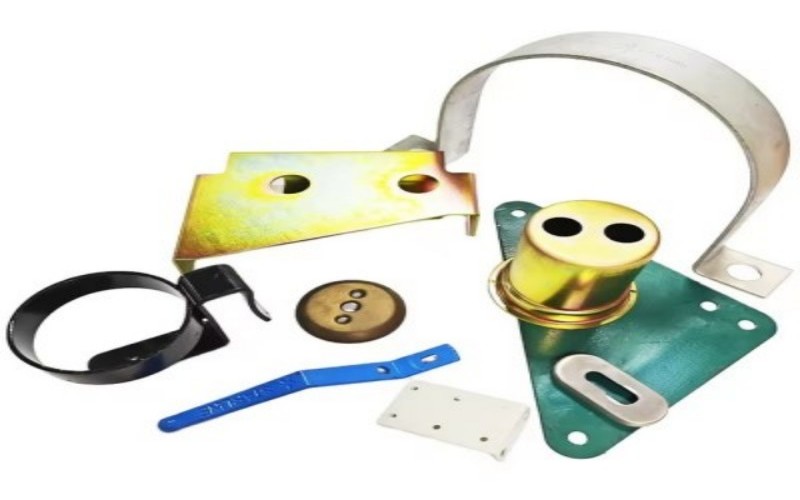
Vehicle manufacturing relies heavily on stamped metal components because modern automobiles contain hundreds of structural and functional parts formed from sheet metal. Components such as mounting brackets, reinforcement plates, clips, and chassis connectors must maintain strict dimensional tolerances to ensure proper alignment during assembly.
Automotive production lines operate at extremely high speeds, and stamping fits naturally into this environment. Large press systems can produce thousands of identical parts per hour while maintaining uniform mechanical properties. Consistency at this scale helps maintain structural integrity in vehicle frames, body assemblies, and safety-related systems. Engineers also favor stamping when designing lightweight structural elements because forming operations can strengthen certain areas of a component through carefully placed bends or ribs.
The electronics industry requires metal components that are both extremely small and highly precise. Connectors, shielding covers, spring contacts, and terminal pins must maintain tight tolerances to ensure reliable electrical connections. Stamping processes are capable of producing these intricate geometries with remarkable repeatability.
Miniaturization is another major factor driving the use of stamped components in electronics. Devices such as smartphones, sensors, and compact control modules require extremely thin yet durable metal structures. Precision stamping allows manufacturers to produce thin metal parts with consistent thickness and accurate edge profiles, which is essential for electrical conductivity and signal integrity. In addition, stamped shielding components help prevent electromagnetic interference in densely packed electronic assemblies.
Medical equipment places unique demands on component manufacturing. Many devices require metals that can withstand sterilization procedures, resist corrosion, and maintain structural integrity in demanding environments. Stamped metal components are commonly used in surgical tools, diagnostic instruments, and implantable device assemblies because the process can produce precise shapes with smooth edges and consistent dimensions.
Regulatory compliance also influences manufacturing choices in the medical field. When producing parts for medical devices, manufacturers must maintain strict quality control and traceability throughout the production process. Stamping offers repeatable production conditions that help maintain consistent part geometry across entire batches, reducing variability in critical components.
In aerospace engineering, weight reduction is often a primary design objective. Aircraft structures and supporting systems must remain strong while minimizing overall mass. Stamped metal components can help achieve this balance because forming operations allow engineers to design reinforced shapes that maintain structural strength without requiring thicker materials.
Renewable energy technologies also rely on stamped components in a variety of systems. Structural supports, electrical contact plates, and mounting hardware in solar or energy conversion systems frequently use stamped metal parts due to their durability and dimensional consistency.
Industry | Typical Stamped Components | Key Engineering Requirements |
Automotive | Brackets, clips, structural connectors | High-volume consistency, structural strength |
Electronics | Connectors, shielding components, terminals | Precision, conductivity, miniaturization |
Medical Devices | Surgical tool parts, diagnostic device components | Corrosion resistance, tight tolerances |
Aerospace & Energy | Reinforcement plates, mounting structures | Lightweight strength, durability |
Although stamping offers significant manufacturing advantages, the effectiveness of a stamped component depends heavily on design decisions made during early engineering stages. Engineers must balance performance requirements with manufacturability to ensure that the final part can be produced efficiently without compromising its intended function.
Successful stamped parts are designed with the production process in mind. Complex geometries may appear feasible in a digital model but can introduce challenges during forming if the metal experiences excessive stress or deformation. Designers therefore evaluate factors such as bend radii, material thickness, and clearance distances between features before finalizing a design. Tolerances also play a major role in manufacturability. Extremely tight tolerances can increase tooling complexity and production costs. Engineers typically determine acceptable tolerance ranges that maintain functional performance while allowing efficient stamping operations.
Before committing to full-scale production, engineers often produce prototypes to validate the design. Prototyping provides an opportunity to verify whether a stamped component performs as expected under real operating conditions. It also helps confirm that the geometry can be formed consistently without causing cracks, distortions, or excessive tool wear. Testing may include dimensional inspection, mechanical stress evaluation, and assembly trials. By identifying potential issues early in development, manufacturers can refine tooling designs and avoid costly production interruptions later in the project.
Close collaboration between engineers and stamping manufacturers is essential for achieving optimal results. Experienced manufacturers understand how tooling design, material behavior, and press capabilities interact during production. Their input can help refine component geometry so that parts maintain performance requirements while remaining practical to manufacture.
When engineers involve manufacturing specialists early in the design process, several advantages typically emerge:
● Tooling designs can be optimized for longer service life and consistent performance.
● Material selection can be aligned with forming characteristics and environmental requirements.
● Production workflows can be structured to reduce secondary operations and assembly complexity.
This collaborative approach allows engineers to develop stamped components that perform reliably while maintaining efficient production throughout the product lifecycle.
Modern engineering demands precision, efficiency, and scalable production. Stamping Parts allow manufacturers to create reliable components that meet strict design requirements across many industries. Ningbo Yinzhou Gonuo Hardware Co., LTD. provides high-quality custom stamping parts with consistent performance, helping businesses improve manufacturing efficiency and support advanced engineering applications.
A: Stamping parts are used to produce precise metal components for automotive, electronics, and industrial assemblies with consistent dimensions.
A: Stamping parts enable rapid production with repeatable accuracy, reducing per-unit costs and maintaining uniform quality across large batches.
A: Stamping parts allow engineers to create optimized geometries that fit exact design constraints and simplify complex assemblies.
A: Stamping parts are preferable when producing large quantities of thin metal components with tight tolerances and efficient material usage.