
Tel:
+86-15381916109
Email:
Email:
No.26 TianJian Lane, Yinzhou District, Ningbo, Zhejiang, China
Views: 0 Author: Site Editor Publish Time: 2025-09-15 Origin: Site


In lifting, rigging, and securing tasks, stainless steel eye bolts serve as essential fasteners, distinguished by a circular loop at one end. Their robust construction allows for safe attachment of ropes, cables, or chains to various structures or machinery. Correct installation is vital to ensure the eye bolts can handle the intended load, extend their lifespan, and maintain structural integrity. This article provides a clear, step-by-step guide to installing stainless steel eye bolts properly, helping users achieve maximum safety, performance, and reliability in their projects.
Proper tools and safety equipment are essential when installing stainless steel eye bolts to ensure both personal safety and correct installation.
Gloves: Protect hands from sharp edges, metal burrs, or accidental slippage while handling the eye bolts.
Safety Glasses: Shield eyes from debris, metal shavings, or dust during drilling or tightening.
Proper Footwear: Closed-toe, sturdy shoes reduce the risk of injury if tools or bolts are dropped.
Wrenches and Screwdrivers: Used to tighten or secure the eye bolt according to manufacturer specifications.
Torque Wrench: Ensures proper torque is applied, preventing over-tightening or under-tightening that could compromise safety.
Drill: Necessary if mounting the eye bolt into solid materials such as concrete, brick, or wood.
Level: Helps confirm that the eye bolt is mounted straight and aligned properly.
Tape Measure: Ensures precise placement, especially when multiple bolts are being installed in a sequence.
Markers or Pencil: Mark drilling points accurately to avoid misalignment or uneven spacing.
Using the correct combination of safety gear and tools not only protects the installer but also ensures that the stainless steel eye bolts are mounted securely and function as intended for lifting or securing loads.
Proper preparation ensures safe and effective installation of stainless steel eye bolts, reducing risks and optimizing load performance.
Check for cracks, bends, or corrosion, and ensure threads are clean. Discard any defective bolts to prevent failure under load.
Identify the material—wood, concrete, or metal—and ensure it is strong enough to support the load. Pre-drill pilot holes in hard materials to prevent cracking or splitting.
Use a pencil, marker, or center punch to indicate the exact spot. Confirm alignment, especially for multiple bolts, to maintain proper spacing and load distribution.
Careful inspection and planning ensure stainless steel eye bolts perform safely and reliably in lifting, rigging, or securing applications.
Proper preparation of the mounting hole is a critical first step for installing stainless steel eye bolts safely and securely. A well-prepared hole ensures the bolt seats correctly and bears loads effectively.
Refer to the manufacturer’s specifications for the appropriate hole diameter based on the eye bolt’s shank size.
Using the correct size prevents excessive play, which could reduce load capacity or cause the bolt to loosen over time.
Avoid making the hole too tight, which may make installation difficult or damage the threads.
Ensure the drill is perpendicular to the mounting surface to create a straight, clean hole.
Take your time when drilling to avoid cracking, splintering, or weakening the material, particularly in wood or concrete.
Use the proper drill bit type for the material: masonry bits for concrete, wood bits for timber, or metal bits for steel surfaces.
Remove dust, chips, and any loose fragments using a brush, compressed air, or vacuum.
A clean hole allows the eye bolt to seat fully, ensuring maximum contact with the surface and optimal load-bearing performance.
Inspect the hole for any cracks or imperfections before proceeding with installation.
Careful attention to drilling and preparing the mounting hole lays the foundation for a secure, durable installation of stainless steel eye bolts, helping prevent failures under load.
After preparing the mounting hole, the next step is to properly insert the stainless steel eye bolt to ensure a secure and reliable installation. Correct insertion is crucial for safety and optimal load-bearing performance.
Align the eye bolt so that the eye faces the intended direction of the load. Proper orientation ensures that the load is applied along the correct axis, reducing stress on the bolt and mounting surface.
For applications requiring precise alignment, use a level or marker to confirm the eye’s orientation before fully securing the bolt.
For threaded stainless steel eye bolts, start by hand-tightening the bolt into the prepared hole.
Ensure the threads engage smoothly without cross-threading, which can damage the bolt or the mounting material.
If the bolt resists threading, back it out and realign carefully before continuing.
Hand-tightening first allows for small adjustments to alignment and ensures the bolt seats properly.
Check that the eye sits flush against the surface without gaps or tilting.
Confirm that the bolt moves smoothly but is secure enough to prevent wobbling.
Proper insertion at this stage ensures that the stainless steel eye bolt is correctly seated, oriented, and ready for final tightening in the next step, providing a solid foundation for safe and effective load handling.
Once the stainless steel eye bolt is properly positioned and the threads are engaged, the next step is to tighten it securely. Proper tightening ensures maximum load-bearing capacity and safe operation while preventing damage to the bolt or mounting surface.
Select a wrench, spanner, or torque tool suitable for the eye bolt size.
For critical lifting applications, a torque wrench is recommended to achieve the manufacturer-specified torque, ensuring consistent and safe tightening.
Excessive force can strip threads, crack the mounting surface, or deform the eye bolt.
Tighten gradually, checking alignment and orientation as you go.
For eye bolts installed in concrete or masonry, ensure proper expansion of sleeve anchors or activation of chemical anchors according to the manufacturer’s instructions.
Verify that the anchor is fully seated and that the eye bolt is stable before applying any load.
By carefully tightening the stainless steel eye bolt to the correct specifications, you secure a reliable and safe attachment point that maximizes performance and longevity.
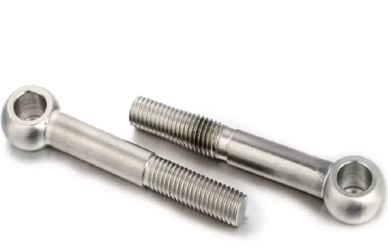
Proper alignment and correct load orientation are critical to ensuring the safety and effectiveness of stainless steel eye bolts. Misalignment or side loading can reduce the bolt’s strength and increase the risk of failure.
Ensure the eye of the bolt is facing the direction in which the load will be applied.
For lifting or rigging, the load should pass through the plane of the eye, not at an angle.
Slightly loosen the bolt if realignment is needed, then retighten according to manufacturer specifications.
Check that threads remain fully engaged and the mounting surface remains secure after adjustment.
Side or angular loads can compromise the structural integrity of the eye bolt and mounting surface.
Use load-spreading devices or multiple eye bolts for angled or uneven forces to maintain safety.
Ensuring correct alignment and proper load orientation maximizes the stainless steel eye bolt’s performance and provides a safe, reliable anchor point for lifting or securing operations.
Conducting a thorough final inspection is essential to ensure the stainless steel eye bolts are installed safely and ready for use. A careful review minimizes the risk of accidents and ensures optimal performance.
Check that each eye bolt is securely tightened according to manufacturer specifications.
Confirm that the eyes are properly aligned with the intended load direction and not angled or misaligned.
Examine the mounting surface or structure for cracks, stress marks, or signs of weakness.
Ensure that the material can safely support the intended load without deformation or failure.
Apply a light, non-critical load to the installed eye bolts to confirm stability.
Observe for any shifting, loosening, or unusual stress to ensure the installation is secure before full operational use.
Performing this final safety inspection guarantees that stainless steel eye bolts provide reliable, durable, and safe anchoring for lifting, rigging, or securing applications.
Proper installation of stainless steel eye bolts is essential for ensuring safety, reliable load-bearing performance, and long-term durability. Following each step carefully—from preparing the mounting surface to performing a final safety inspection—reduces the risk of accidents and maximizes the effectiveness of the eye bolts.
Regular inspections and maintenance routines further ensure that these bolts continue to function safely over time, preventing failures and prolonging service life.
Ningbo Yinzhou Gonuo Hardware Co., LTD. provides high-quality stainless steel eye bolts designed for strength, corrosion resistance, and dependable performance across a variety of industrial, construction, and rigging applications, making them a trusted choice for professionals and DIY enthusiasts alike.