
Tel:
+86-15381916109
Email:
Email:
No.26 TianJian Lane, Yinzhou District, Ningbo, Zhejiang, China
Views: 0 Author: Site Editor Publish Time: 2026-03-16 Origin: Site


What keeps modern factories running faster and more efficiently? Many industries now depend on Stamping Parts to maintain speed and accuracy in production. In this article, you will learn how high-precision stamping improves manufacturing efficiency, supports complex component design, and helps industries scale production while maintaining consistent quality.
In large-scale industrial production, even the smallest dimensional deviation can cause alignment issues during assembly. When components do not fit precisely, manufacturers may experience delays, rework, or product failures. High-precision stamping parts help eliminate these risks by ensuring consistent dimensions and repeatable tolerances across thousands or even millions of components. Modern stamping technologies can achieve extremely tight tolerances, allowing parts to integrate smoothly into automated assembly lines. This level of precision is particularly important in industries where components must interact with other mechanical or electrical systems. Consistency also simplifies quality control because fewer variations occur between production batches.
Some of the operational benefits manufacturers gain from precision stamping include:
● Reduced assembly adjustments and manual fitting
● Lower rejection rates during quality inspection
● Improved compatibility with automated production lines
● Greater reliability in complex mechanical systems
Because each part is produced using the same die and press configuration, stamped components maintain identical geometry and thickness across large production volumes. This uniformity improves product durability and supports efficient downstream manufacturing processes.
Speed is a major factor in modern industrial competitiveness. Precision stamping allows manufacturers to produce parts at extremely high speeds while maintaining strict dimensional accuracy. Advanced stamping presses can perform multiple forming operations within a single cycle, dramatically increasing output. Unlike slower manufacturing techniques such as machining or casting, stamping relies on highly automated equipment that can process continuous metal coils or sheets. This allows production lines to run for extended periods with minimal interruptions.
Key performance characteristics that make stamping suitable for high-volume manufacturing include:
● Rapid press cycles capable of producing large quantities of parts
● Automated material feeding systems that maintain continuous production
● Consistent die operation that preserves dimensional stability
For industries with high product demand, this combination of speed and accuracy helps maintain supply consistency while keeping production costs under control.
Modern products often require components with intricate shapes or functional features. Precision stamping tools are designed to create these complex geometries during the forming process, reducing the need for secondary machining. Operations such as punching, bending, embossing, and flanging can be performed sequentially within the same production setup. This capability allows manufacturers to transform flat metal sheets into fully functional parts in a single workflow.
Typical features that can be integrated into stamped components include:
● Mounting holes and slots
● Structural ribs for reinforcement
● Formed edges and bends
● Surface textures or embossed patterns
By combining multiple operations in one process, manufacturers shorten production time and improve consistency between parts. This streamlined workflow is one of the main reasons stamping remains widely used in modern manufacturing.
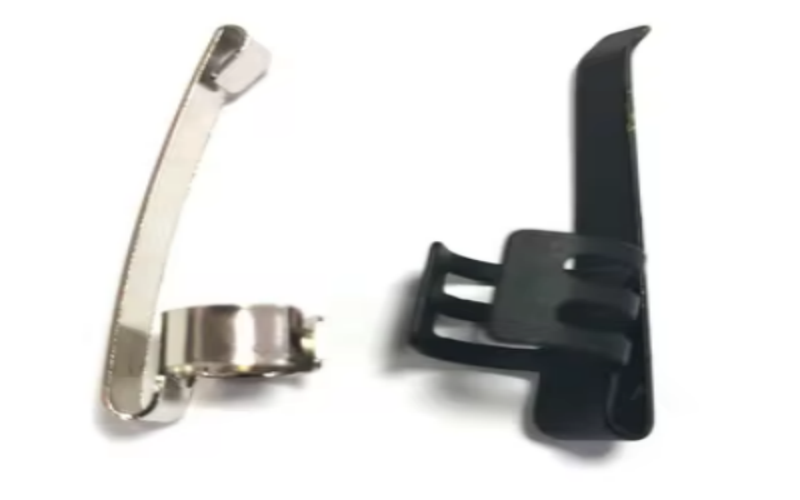
Production speed plays a critical role in determining the overall efficiency of a manufacturing facility. Stamping presses operate through rapid, repetitive motion that forms parts in fractions of a second. Because multiple operations can be integrated into one cycle, stamping significantly reduces production time compared with processes that require separate machining steps. Many stamping systems also support automated feeding and part ejection, allowing the production line to run continuously with minimal operator intervention. This continuous workflow increases throughput and reduces bottlenecks in large manufacturing environments.
Operational advantages of high-speed stamping production include:
● Shorter manufacturing lead times
● Higher output per machine
● Reduced reliance on manual labor
● Better synchronization with automated assembly systems
These improvements allow manufacturers to scale production quickly when demand increases.
Although stamping requires initial investment in tooling and dies, the long-term cost efficiency becomes evident during high-volume production runs. Once tooling is developed, the same dies can be used to produce a large number of identical parts with minimal variation. This efficiency reduces labor costs and minimizes additional finishing processes, making stamping a cost-effective solution for many industrial components.
Cost Factor | Stamping Advantage | Impact on Production |
Tooling investment | Reusable dies for long production runs | Lower cost per part over time |
Labor requirements | Highly automated operation | Reduced workforce dependency |
Production speed | High output per machine cycle | Faster manufacturing throughput |
Secondary processing | Many features formed in one operation | Less need for machining or finishing |
These factors make stamping particularly attractive for industries producing large quantities of standardized components.
Efficient use of raw materials is another important advantage of precision stamping. During production planning, engineers design die layouts that maximize the number of parts that can be formed from a single metal sheet or coil. Optimized nesting arrangements reduce scrap material and improve overall material yield. This not only lowers manufacturing costs but also supports sustainability goals by minimizing wasted resources.
Manufacturers typically improve material efficiency through:
● Optimized die design and layout planning
● Continuous coil feeding systems
● Accurate cutting and blanking processes
These strategies allow manufacturers to make better use of raw materials while maintaining precise part geometry.
Consistency is critical when producing components for complex industrial systems. Because stamping relies on precisely engineered tooling, every part produced from the same die shares identical dimensions and surface characteristics. Automation further enhances quality stability by removing many of the variables associated with manual manufacturing processes. As a result, stamped parts typically require fewer inspections and adjustments during production.
Quality improvements supported by stamping include:
● Uniform wall thickness and structural integrity
● Stable dimensional accuracy across large batches
● Reduced variation between production runs
● Improved compatibility with automated assembly systems
By delivering consistent part quality, stamping helps manufacturers maintain reliable production workflows and meet strict industrial standards.
The automotive sector is one of the largest users of precision stamping parts, largely because vehicle production requires a combination of high volume, structural reliability, and strict dimensional accuracy. Modern vehicles contain hundreds of stamped components that serve both structural and functional roles. These parts must be manufactured in large quantities while maintaining consistent tolerances so they can integrate smoothly with robotic assembly systems.
Stamped components are widely used in engine assemblies, body structures, and mounting systems. Because automotive production lines operate at extremely high speeds, stamping offers the efficiency required to keep pace with mass manufacturing demands. The process also maintains material strength, which is critical for components that support mechanical loads or protect passengers during impact scenarios.
Typical stamped components in automotive production include:
● Structural brackets and reinforcement plates
● Battery housings and electrical connectors
● Seatbelt mounts and safety system components
● Chassis mounting points and frame supports
Precision stamping also helps manufacturers reduce vehicle weight by enabling thinner materials to be formed into reinforced shapes. This design flexibility allows engineers to balance structural strength with fuel efficiency requirements.
In aerospace manufacturing, components must meet extremely demanding performance standards. Aircraft structures require parts that are both lightweight and capable of withstanding significant mechanical stress. Precision stamping supports these requirements by producing high-strength components with accurate dimensions and consistent material properties. Aerospace parts often incorporate specialized alloys such as aluminum or titanium, which must be formed carefully to avoid structural weaknesses. Stamping tools designed for aerospace applications can create intricate reinforcement patterns and structural contours while maintaining tight tolerances. Key aerospace applications for precision stamping include structural panels, mounting brackets, and reinforcement elements that support avionics or engine systems. Because aircraft assembly relies on precise alignment between components, the repeatability of stamped parts helps maintain structural integrity throughout the aircraft.
Electronics manufacturing depends heavily on small, highly accurate components that must fit within compact device structures. Precision stamping allows manufacturers to create these parts with consistent thickness and detailed geometries that support electrical conductivity and shielding performance.
In many cases, stamping is used to produce thin metal parts with features measured in fractions of a millimeter. These components must maintain precise spacing and alignment to ensure proper electrical performance. Because stamping is capable of producing these features rapidly and consistently, it is widely used in the production of electronic hardware.
Common stamped electronic components include:
● Electrical connectors and contact terminals
● Electromagnetic shielding covers
● Battery contacts and conductive clips
● Structural frames for circuit assemblies
The ability to manufacture these parts quickly while maintaining exact tolerances helps electronics manufacturers scale production without compromising reliability.
Medical technology requires extremely high standards of precision and reliability. Even small component deviations can affect device performance or patient safety. Precision stamping supports this industry by producing parts that meet strict dimensional requirements while maintaining consistent surface quality. Stamped components are often used in surgical instruments, diagnostic equipment, and specialized medical devices. These parts must function reliably under repeated sterilization and mechanical use, which requires both durable materials and accurate manufacturing processes.
Medical device manufacturers rely on stamping when components require complex shapes but must still maintain tight tolerances. Because the stamping process can produce uniform parts in large quantities, it supports both product consistency and regulatory compliance in medical manufacturing environments.
Industry | Typical Stamped Components | Manufacturing Benefit |
Automotive | Brackets, structural mounts, safety components | High-volume production with consistent strength |
Aerospace | Reinforcement panels, mounting brackets | Lightweight structures with tight tolerances |
Electronics | Connectors, shielding covers, micro parts | Precision for compact electronic designs |
Medical | Surgical tool components, instrument housings | Reliable parts meeting strict safety standards |
Material selection plays a major role in determining the performance and durability of stamped components. Engineers must consider mechanical strength, corrosion resistance, and formability when selecting materials for stamping operations. Different industries prioritize different material characteristics depending on the function of the final component.
For example, carbon steel is frequently used in industrial and automotive applications because it provides excellent strength and durability. Aluminum is often selected when weight reduction is important, such as in aerospace or transportation equipment. Stainless steel is commonly used in environments where corrosion resistance or sanitation is critical, including medical and food-processing equipment.
Material thickness and ductility also influence how easily the material can be formed during stamping. If the material is too brittle, it may crack during forming operations. If it is too soft, the part may lose structural integrity after shaping.
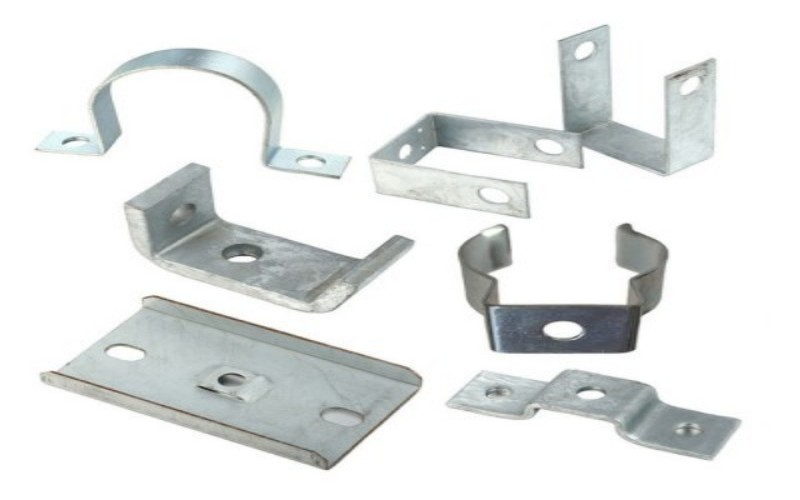
The stamping process itself must be matched to the design complexity and production scale of the component. Different stamping methods are optimized for different manufacturing requirements, and selecting the wrong process can reduce efficiency or increase costs.
Stamping Method | Best Use Case | Key Production Advantage |
Progressive die stamping | High-volume production with repeated operations | Multiple forming steps completed in a single press cycle |
Transfer die stamping | Larger or complex components | Parts moved between stations for separate forming operations |
Fine blanking | Parts requiring smooth edges and high accuracy | Minimal finishing required after cutting |
Progressive die systems are commonly used when manufacturers need to produce millions of identical parts efficiently. Transfer stamping systems are often chosen for larger parts that require multiple forming stages but cannot remain attached to a continuous strip of material.
Tooling quality directly affects the precision and repeatability of stamped components. High-quality dies must be engineered to withstand repeated mechanical stress while maintaining accurate geometry. Over long production runs, even minor wear in tooling can introduce dimensional variations that affect part performance.
To maintain production accuracy, manufacturers typically implement several quality assurance practices:
● Regular die inspection and maintenance
● Dimensional verification using precision measurement tools
● Automated optical inspection for defect detection
● Statistical process monitoring to detect production variation
Advanced tooling design software also allows engineers to simulate stamping operations before production begins. This helps identify potential material deformation issues or stress concentrations that could lead to part defects.
By combining carefully selected materials, appropriate stamping processes, and well-maintained tooling systems, manufacturers can maintain high production efficiency while ensuring that stamped components meet demanding industrial performance requirements.
High-precision Stamping Parts improve industrial production by delivering speed, accuracy, and consistent quality. They support demanding industries such as automotive, electronics, and medical manufacturing. Ningbo Yinzhou Gonuo Hardware Co., LTD. provides reliable stamping solutions, advanced tooling, and stable production capabilities that help manufacturers reduce costs, improve efficiency, and maintain dependable product performance.
A: Stamping Parts form brackets, connectors, and housings used in automotive, electronics, and machinery assembly.
A: Stamping Parts enable fast, repeatable production cycles, reducing machining steps and increasing throughput.
A: Stamping Parts are often made from carbon steel, aluminum, or stainless steel depending on strength and corrosion requirements.
A: High-precision Stamping Parts maintain consistent tolerances, allowing reliable alignment and smooth automated assembly operations.