
Tel:
+86-15381916109
Email:
Email:
No.26 TianJian Lane, Yinzhou District, Ningbo, Zhejiang, China
Views: 0 Author: Site Editor Publish Time: 2025-08-21 Origin: Site


When you pick hex socket cap head bolts, you need to match them to your project. Think about important things like load, material, size, and type. The right bolt gives you good strength and trust. Here are the main things engineers look at:
Decision Factor | Explanation |
|---|---|
Load Requirements | Pick the grade and size that can hold the weight. |
Material and Finish | Choose the right material and coating for the place and rust. |
Thread Type | Coarse threads are fast to put together; fine threads are good for tight fits. |
Compliance | Make sure the bolts follow rules and have the right labels. |
Installation & Torque | Use the right tools and tighten bolts enough for safety. |
Application-Specific | Think about shaking and how tools fit the bolts. |
If you follow these tips, you can choose the best hex head screws, socket head cap screws, and bolts for your job.
Pick bolts that fit your project's weight and space. This helps keep things strong and safe.
Choose the best material and coating for your bolts. This protects them from rust, heat, and chemicals.
Make sure you get the right size, thread type, and head style. This helps bolts fit your project and tools well.
Use the right tools like Allen keys and torque wrenches. This helps you put in bolts without breaking them.
Don't make mistakes by measuring everything carefully. Match the materials and check thread types before you buy.
You need to think about how much weight your project will hold. If you use the wrong bolts, parts can loosen or break. Always check the load requirements before you choose. High strength bolts work best for heavy loads or places with a lot of vibration. These bolts come in different grades, like 8.8, 10.9, or 12.9. Each grade gives a different level of strength. You should match the grade to your project’s needs. High torque is important for tightening bolts so they stay secure. If you use bolts with the right strength and grade, your project will last longer and stay safe.
Choose the correct size and grade to avoid damage or loosening.
Match the thread type and standard (like ISO or SAE) to your application.
Use high strength bolts for structural or high-load jobs.
The place where you use bolts matters a lot. Moisture, heat, and chemicals can change how bolts work. If you use bolts outdoors or near water, pick ones that resist rust. Stainless steel bolts work well in wet or chemical areas. For hot places, use special alloys that handle high temperatures. Surface coatings like galvanizing or zinc-nickel help protect bolts from rust and wear.
Moisture can cause rust and weaken bolts.
High or low temperatures affect bolt strength.
Chemicals can damage bolts if you do not choose the right material.
You must check how much room you have to install bolts. Some projects have tight spaces, so you need bolts with smaller heads or special shapes. Hex socket cap head bolts fit well in small areas because you use an Allen key instead of a wrench. You can also pick low profile heads for even tighter spots.
Dimension Aspect | Standard Measurement Relative to Thread Size |
|---|---|
Head Diameter | About 1.5 times the thread size |
Head Height | Equal to the thread size |
Low Profile Head | Reduced head height for tight spaces |
Tip: Always measure the space before you buy bolts. This helps you avoid problems during installation.

When you choose hex socket cap head bolts, you will see several types of cap screws. Each type has a different head shape and fits different needs. Knowing these differences helps you pick the best screws for your project.
Standard socket cap screws have a tall, round head with a deep hex hole. You can use an Allen key to tighten them. These screws give you high strength and let you use a lot of torque. You often see them in machines and heavy-duty jobs. They come in strong grades like 8.8, 10.9, and 12.9.
Low profile socket cap screws have a head about half as tall as standard ones. They fit in tight spaces where a tall head will not work. You still get good strength, but the smaller head means you cannot tighten them as much as standard screws. Use low profile screws when you need to save space but still want strong fasteners.
Feature | Standard Socket Cap Screws | Low Profile Socket Cap Screws |
|---|---|---|
Head Height | Tall, cylindrical | About 50% lower than standard |
Socket Size | Large hex hole | Smaller hex hole |
Strength | Very high | High, but less than standard |
Best Use | Machines, heavy loads | Tight spaces, thin materials |
Button head screws have a rounded, low-profile head with a flat top. They look smooth and neat, so you often see them in places where the screw will show, like furniture or electronics. These screws spread out the load and give a nice finish.
Flat head screws have a countersunk head. When you install them, they sit flush with the surface. This makes them perfect for woodworking, cabinetry, or any job where you want the screw to disappear into the material. Flat head screws also spread the load well, which helps protect the material.
You should match the screw type to your project’s needs:
Use standard socket cap screws for machines, automotive parts, or any job that needs high strength.
Pick low profile socket cap screws for equipment with limited space or thin panels.
Choose button head screws when you want a smooth, rounded look and moderate strength, such as in furniture or visible parts.
Select flat head screws for flush finishes in woodworking, cabinetry, or metalwork.
Type | Best For | Strength | Space Efficiency | Appearance |
|---|---|---|---|---|
Standard Socket Cap Screws | Machines, heavy loads | Very High | Moderate | Industrial |
Low Profile Socket Cap Screws | Tight spaces, thin materials | High | Excellent | Functional |
Button Head Screws | Furniture, visible parts | Moderate | Good | Smooth, rounded |
Flat Head Screws | Woodwork, flush finishes | High | Excellent | Seamless, flush |
Tip: Always check the space, strength, and look you want before picking screws. The right choice makes your project safer and better looking.
You may also see hex socket screws, allen screws, hex cap screws, allen head bolts, and flange hex screws listed for different uses. Each type of cap screw gives you a unique mix of strength, space-saving, and appearance. Picking the right screws helps your project last longer and look more professional.
You need to pick the right material and grade for your hex socket cap head bolts. Most bolts are made from carbon steel or alloy steel. These materials have different strength levels. SAE grades 2, 5, and 8 show how strong a bolt is. Grade 2 bolts use medium or low-carbon steel. They have a tensile strength of about 60,000 to 74,000 psi. Grade 5 bolts use medium carbon steel. They can reach up to 120,000 psi. Grade 8 bolts use medium carbon alloy steel. They can handle around 150,000 psi. Metric bolts use high tensile grades like 8.8, 10.9, and 12.9. You can look at the head markings to find the grade.
Material | Strength Grades (Metric) | Strength Grades (Imperial) |
|---|---|---|
Carbon Steel | 4.8, 8.8, 10.9, 12.9 | 2, 5, 8 |
Stainless Steel | 4.8, 8.8, 10.9, 12.9 | 2, 5, 8 |
Tip: Always match the bolt grade to your project’s load needs. Stronger bolts are best for heavy-duty jobs.
Stainless steel bolts protect well against rust and corrosion. Grade 304 stainless steel works for most jobs. It resists oxidation and handles moderate heat. Grade 316 stainless steel is good for marine use. It has molybdenum, which helps fight chloride corrosion. This makes it great for saltwater, chemicals, and coastal places. Special materials like duplex stainless steel and high nickel alloys, such as Hastelloy and Incoloy, work even better in tough chemical areas. These bolts keep their strength and shape, even with harsh chemicals.
Use stainless steel for outdoor, wet, or chemical places.
Pick marine-grade bolts for boats, docks, or buildings near the coast.
Specialty alloys are best for chemical plants or places with strong acids.
You want bolts that last, especially where corrosion is a problem. Stainless steel bolts, like grades 304, 316, and super duplex, resist rust in humid, salty, or acidic places. Surface treatments help protect bolts too. Zinc plating, blackening, and hot-dip galvanizing add extra protection. Dacromet coating is great for resisting salt spray, acid rain, and chemicals. It uses zinc, aluminum, and chromate to make a self-healing layer. This coating works well for marine, automotive, and construction jobs. It also stops problems like hydrogen embrittlement. It can handle high temperatures up to 300°C.
Note: Pick bolts with the right material and coating for your environment. This keeps your project safe and helps your fasteners last longer.
You need to choose the right diameter and thread pitch for your hex socket cap head bolts. The diameter is the width of the bolt’s shank. Common sizes range from small (like M3 or 1/8 inch) to large (like M24 or 1 inch). The pitch is the distance between threads. Fine threads have a smaller pitch and fit tightly. Coarse threads have a larger pitch and are easier to assemble. In most industrial applications, bolts with diameters up to 1 inch use a 3A thread class. This gives you a tight fit and strong hold. Bolts over 1 inch use a 2A thread class, which is a standard fit. These standards help your bolts fit well and stay secure in your project.
Tip: Always match the thread type to your material and the job’s needs. Fine threads work best for hard materials or when you need a tight fit. Coarse threads are better for quick assembly or softer materials.
You must pick the correct length for your bolts. The length is measured from the bottom of the head to the end of the bolt. If you choose a bolt that is too short, it may not hold your parts together. If you pick one that is too long, it can stick out and cause problems. For most diy projects, you want the bolt to pass through all parts and leave enough thread for a nut or for the material to grip. Always check the thickness of your materials before you buy bolts.
Measure the total thickness of all parts you want to join.
Add extra length if you need to use washers or lock nuts.
Avoid bolts that are much longer than needed.
The head size of your bolt affects how you install it and how much torque you can apply. Standard socket head cap screws have a head height equal to the shank diameter. This makes them easy to tighten with an Allen key. The head diameter also matters. A larger head spreads the load over a bigger area, but it can reduce the preload for the same torque. For example, a flanged cap screw with a bigger head can lower the preload by about 8% at the same torque. You should also think about the space around the bolt head. If you have limited space, choose a low-profile or button head screw.
Bolt Feature | Standard Measurement |
|---|---|
Head Height | Equal to shank diameter |
Head Diameter | About 1.5 times shank diameter |
3A (≤1 inch), 2A (>1 inch) |
Note: The head style does not change the clamping force, but it does affect how much friction you get during tightening. Always use the right tool size for the head to avoid stripping.
It is important to look at tolerances when picking socket head cap screws. Tolerances tell you how much the screw size can change during making. Most socket head cap screws have very small tolerances, between +/-0.01mm and +/-0.05mm. These exact sizes help screws fit well and work right in your project. Threads with high precision follow rules like ISO, DIN, and ANSI. This gives strong performance, a good fit, and the right preload. Testing rules like ISO 898-1 and EN 14399 check that screws are strong and reliable. Many industries, such as cars, electronics, and wind power, need these tight tolerances for safety.
Tip: Always look for certification marks or test papers. These marks show your cap screws meet world standards.
The right coating or finish helps socket head cap screws last longer. Coatings keep screws safe from rust, damage, and chemicals. Here are some common finishes:
Zinc plating protects from rust and looks shiny.
Hot dipped galvanized screws fight rust and last outdoors.
Zinc flake coating guards against salt and chemicals.
Black oxide gives a mild shield and a black look.
Nickel plating stops rust and helps conduct electricity.
Chrome plating makes screws tough and shiny.
Phosphate coating forms a hard layer, often used with oil or paint.
Stainless steel screws do not need extra coating. Grades like 304 and 316 stop rust and chemicals.
Coating/Finish | Characteristics & Benefits |
|---|---|
Zinc Plating | Cheap, stops rust, helps paint stick, looks nice |
Hot Dipped Galvanized | Very good at stopping rust, helps screws last longer |
Zinc Flake Coating | Great at stopping rust, protects from hydrogen embrittlement |
Black Oxide | Mild rust protection, cool black color |
Nickel Plating | Stops rust, bends easily, conducts electricity |
Chrome Plating | Stops rust and damage, shiny look |
Phosphate Coating | Hard layer, needs oil or paint for best rust protection |
Stainless Steel | Strong material, stops rust and chemicals, grades 304 and 316 |
Note: Pick the coating or finish based on where you use the screws and how much protection you want.
Drive size is important when you put in socket head cap screws. Drive size means how wide the hex hole is in the screw head. You use an Allen key or hex wrench to turn these screws. A bigger drive size lets you use more force, which helps with heavy jobs. Smaller drive sizes fit in small spaces but cannot handle as much force. Always match the drive size to your tool and what you need for the job. You can check the screw’s head marks to see the grade and drive size.
Large drive size: Good for heavy loads and strong force.
Small drive size: Fits tight spaces and light jobs.
Head marks: Help you pick the right grade and drive size for safety.
Tip: Use the right tool size so you do not strip the hex hole. This keeps your cap screws strong and easy to take out.
You need the right hex head screws for your project. Follow these steps to get the best fit and performance:
Measure the Bolt Length
Measure from the bottom of the head to the tip. This helps you match the screw to your material’s thickness.
Check the Diameter
Use a caliper or micrometer to find the screw’s diameter. Accurate measurement keeps your project safe and stops damage.
Match the Thread Pitch
Make sure the thread pitch matches the other parts. If threads do not match, the fit will be loose or parts can break.
Select the Head Style and Drive Type
Pick a head style that fits your space and torque needs. A finished hex head works for most jobs. Heavy hex heads spread out the load more. Choose a drive size that fits your tools and lets you use enough force.
Choose the Right Material and Grade
Think about the environment and strength needed. Stainless steel is good for wet or corrosive places. Carbon steel or alloy steel works for strong jobs. Check the grade, like SAE J429 Grade 5 or Grade 8, to match the load.
Pick the Right Finish or Coating
If your project faces moisture or chemicals, pick a finish like galvanization or black oxide. These coatings protect hex head screws from rust and wear.
Prepare the Materials
Clean the surfaces and take away any dirt. Drill pilot holes if you need them. This helps the screw go in smoothly.
Insert and Tighten the Screw
Put the screw into the hole and use the right driver or wrench. Tighten it to the recommended torque. For high torque, use a torque wrench so you do not over-tighten.
Use Washers if Needed
Add flat or lock washers to spread the load and stop loosening. Washers help keep screws tight over time.
Check for Stability
After tightening, check if the connection is stable. Make sure the screw holds the parts together well.
Tip: Always double-check your measurements and match the screw size, thread, and material to your project. This stops problems during installation and keeps your project safe.
You need to match hex head screws to your project. Every job needs different strength, corrosion resistance, and looks. Here are some tips to help you choose the right hex head screw:
Threading
Fully threaded hex head screws hold tight along the whole length. Partially threaded screws help with alignment and work well for structure.
Material Selection
Stainless steel is good for marine, food, or chemical places. Galvanized steel works for outdoor or building jobs. Carbon steel fits most indoor uses. For electric or marine jobs, brass or silicon bronze is good for conductivity and corrosion resistance.
Strength Requirements
SAE J429 Grade 5 screws work for medium strength, like cars or buildings. Grade 8 is best for heavy-duty jobs. For tough places, 316 stainless steel gives the best corrosion protection.
Finish and Coating
Black oxide or galvanization gives extra protection from rust. These finishes help hex head screws last longer in tough places.
Head Type
Finished hex heads are for general use. Heavy hex heads give more surface and spread out the load, which is good for structure or flange bolting.
Precision and Tolerance
For jobs that need tight tolerances, like OEM or precision equipment, use cap screws with washer faces and tighter standards.
Specification Aspect | Description | Application-Specific Requirement Matched |
|---|---|---|
SAE J429 Grade 5 | Medium carbon steel, heat-treated, tensile strength ~120,000 psi | Automotive and construction industries requiring medium strength fasteners |
SAE J429 Grade 8 | Medium carbon alloy steel, heat-treated, tensile strength ~150,000 psi | High strength needs in automotive and construction applications |
304 Stainless Steel | Austenitic stainless steel with 17-19% chromium, 8-10% nickel, corrosion and heat resistant | Chemical, food processing, marine, and coastal environments needing corrosion resistance |
316 Stainless Steel | Similar to 304 but with molybdenum (2-3%) and higher nickel (10-14%) for enhanced corrosion | More aggressive corrosive environments like marine and chemical processing |
Silicon Bronze | Alloy 651 or 655, non-magnetic, electrically conductive, corrosion resistant | Marine, electrical, power, and energy industries requiring conductivity and corrosion resistance |
Brass | Copper-zinc alloy, electrically conductive, non-magnetic, corrosion resistant | Electrical, communications, builders hardware, some marine applications |
Finishes (Black Oxide, Galvanization) | Protective coatings to enhance corrosion resistance | Environmental exposure requiring corrosion protection |
Head Types (Finished, Heavy Hex) | Finished hex for general use; heavy hex for increased bearing surface and load distribution | Structural and flange bolting applications needing higher load distribution |
Threading and Precision | Cap screws have washer face and tighter tolerances, often used in OEM and precision applications | Applications requiring mechanical precision and tight tolerances |
Note: Always match hex head screws to the job’s environment, load, and looks. The right choice gives you a safe, strong, and long-lasting result.
When you pick the right hex head screw, your project is safer and more reliable. You save time and money by avoiding mistakes and replacements. Remember to think about size, thread, material, finish, and application before you buy or install hex head screws. This careful planning helps you get the best performance from your hex socket cap head bolts and other fasteners.
When you choose hex head screws, you want to avoid common mistakes that can weaken your project or cause it to fail. Many people make errors with size, material, or thread type. Knowing these mistakes helps you pick the right screws every time.
Common Mistake | Description | How to Avoid | Consequences |
|---|---|---|---|
Using screws that are too short, long, thick, or thin for the job. | Measure carefully and match both length and diameter to your needs. | Loose parts, stripped threads, weak joints, or even total failure of the assembly. | |
Incorrect Material | Picking screws made from the wrong metal for the environment or load. | Choose materials like alloy steel or stainless steel for strength and corrosion resistance. | Rust, bending, cracking, or breaking under stress or in harsh conditions. |
Overlooking Thread Type | Ignoring thread pitch or using mismatched threads. | Match thread pitch and diameter exactly; check if you need coarse or fine threads. | Stripped threads, loose fits, or screws that do not tighten properly. |
You need to select the right size for hex head screws. If you use the wrong size, the screws may loosen over time. This can lead to mechanical problems or even dangerous failures. A screw that is too short will not hold parts together. One that is too long may stick out or damage other parts. Using the wrong diameter or thread pitch can strip threads and weaken the connection. Always measure both the length and diameter before you buy. Precise sizing keeps your assembly strong and safe, especially in heavy-duty jobs.
Tip: Double-check your measurements before installation. The right size keeps your project secure and prevents costly repairs.
Material choice matters when you pick hex head screws. If you use soft metals like aluminum where high strength is needed, the screws can bend or break. In wet or chemical areas, the wrong material will rust or corrode. You should use alloy steel or stainless steel for high-stress or outdoor jobs. These materials resist corrosion and hold up under heavy loads. If you use hardware store-grade screws instead of high-strength fasteners, you risk early failure. Always match the material to the job’s demands.
Alloy steel gives high strength for heavy loads.
Stainless steel resists rust in wet or salty places.
Using the wrong material can cause cracks, rust, or even broken screw heads.
Thread type is easy to overlook, but it is very important. Hex head screws come in different thread pitches and standards. If you mix up coarse and fine threads, the screws may not fit or hold tight. Mismatched threads can strip easily or require too much force to install. Always check both the pitch and diameter before you start. Fine threads strip more easily than coarse threads, so use the right type for your material and job. Mixing metric and SAE threads can also cause problems.
Note: Matching the correct thread type ensures your screws fit well and stay tight, preventing installation failures.
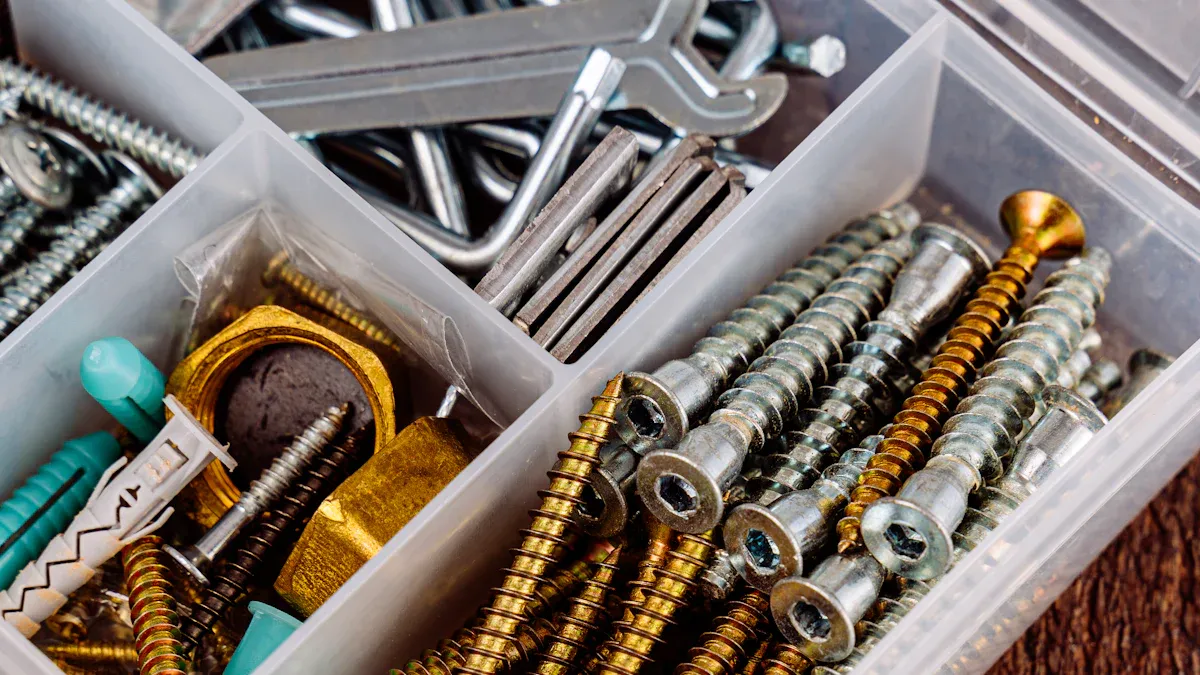
You need the right tools to install a screw with socket correctly. Using the proper equipment helps you avoid damage and makes your work easier. Here are the essential tools you should have:
Hex Keys or Allen Wrenches
These tools fit into the hexagonal hole of the screw with socket. Choose the correct size to match the screw head. A snug fit prevents slipping.
Torque Wrench
This tool lets you apply the right amount of force. Using a torque wrench helps you avoid over-tightening or under-tightening the screw with socket.
High-Quality Hex Bits
Good hex bits reduce the risk of damaging the screw head. Some bits have special designs that improve contact and help prevent scratches or deformation.
Calibrated Tools
Always use tools that are in good condition and properly calibrated. This ensures you apply the correct preload and keep the screw with socket secure.
Tip: Clean your tools before use. Dirt or debris can cause the tool to slip and damage the screw head.
Tool | Purpose |
|---|---|
Hex Key/Allen Wrench | Fits the hex socket for turning |
Torque Wrench | Applies precise tightening force |
Hex Bit | Reduces risk of head deformation |
Stripping the head of a screw with socket can make removal difficult and weaken your assembly. You can prevent this problem by following a few best practices:
Use the Correct Tool Size
Always match the tool size to the screw with socket. A tool that is too small or too large can slip and round off the edges.
Apply Proper Torque
Tighten the screw with socket to the recommended torque. Over-tightening can strip the internal drive, while under-tightening can cause loosening.
Install Slowly and Evenly
Turn the screw with socket slowly and apply steady pressure. Quick or uneven force increases the risk of stripping.
Check for Debris
Make sure the socket is clean before inserting your tool. Dirt or metal shavings can cause the tool to slip.
Use High-Quality Tools
Good tools grip better and reduce the chance of damaging the screw head. This is especially important for allen screws and other precision fasteners.
Note: Routine maintenance and careful installation help your screws last longer and perform better.
You can choose the right hex socket cap head bolt by following these steps:
Assess your project needs, including load and environment.
Select the correct bolt type for your space and design.
Choose a material that matches your strength and corrosion requirements.
Determine the right size and thread for a secure fit.
Check features like coatings and drive size for extra protection.
Matching the bolt to your project keeps your work safe and reliable. You can use this process for diy projects or professional builds. If you want expert advice or need help with your order, contact our team to discuss your project needs.
A hex socket cap head bolt has a cylindrical head with a hexagonal hole. You use an Allen key to tighten it. This bolt works well in machines, furniture, and diy projects where space is tight.
Measure the thickness of your materials. Choose a bolt that passes through all layers and leaves enough thread for a nut or secure grip. Always check the diameter and length before buying.
Yes, you can use these bolts outdoors. Pick stainless steel or bolts with a corrosion-resistant coating. These options help prevent rust and keep your project strong in wet or harsh environments.
Yes, these bolts work great for diy projects. You get a strong hold and a clean look. The hex socket design lets you install them in tight spaces using simple tools.
You need an Allen key or hex wrench that matches the bolt’s drive size. For best results, use a torque wrench to tighten the bolt to the recommended force. This helps prevent over-tightening or stripping.